


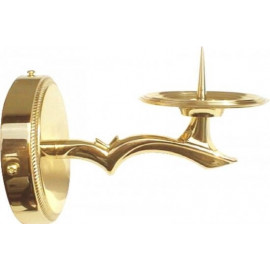
What Are Church Wall Lamps and Sconces?
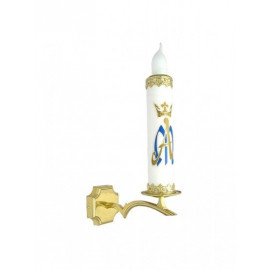
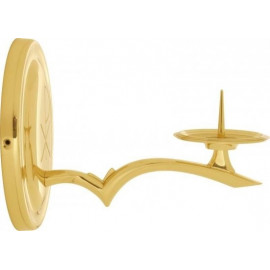
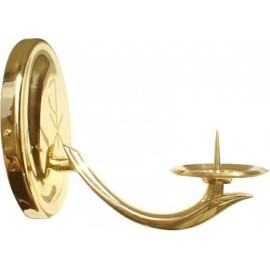
Church wall lamps — also called wall sconces or wall lights, and known in Polish tradition as zacheuszki — are candle or electric fixtures mounted directly on the walls of a church: the sanctuary, the nave, side chapels and the sacristy. They light the space around the altar and along the aisles, and in many churches a series of small brass sconces still marks the twelve places anointed with chrism when the church was consecrated. Every piece in this collection is cast in solid brass, polished and lacquered with a heat-cured clear finish, so the golden surface needs no polishing and no maintenance.
Sconces vs. Sanctuary Lamps, Vigil Lamps and Candlesticks
These four fixtures are often confused, but each has a different job in a Catholic church:
- Wall sconces (wall lamps) — fixed to the wall; hold a candle or an electric bulb; used for ambient light, for the consecration crosses and along the nave. This is what you will find on this page.
- Sanctuary lamps — the eternal light that burns before the tabernacle, usually with red glass; hanging, standing or wall-mounted. It is a liturgical sign of the Real Presence, not general lighting. See also what a sanctuary lamp is and why every Catholic church has one.
- Vigil lamps — small lamps, often votive, lit by the faithful before a shrine, statue or icon, especially in Eastern Catholic and Orthodox churches.
- Candlesticks — freestanding holders for the altar candles required at Mass; they stand on or beside the altar, not on the wall.
In short: a sconce lights the room, a sanctuary lamp marks the tabernacle, a vigil lamp receives a prayer, and a candlestick carries the altar candles.
Candle Sconces vs. Electric Sconces
Both formats have a long history in church interiors, and many parishes use both.
Candle sconces hold a real candle — traditionally beeswax or a beeswax blend — and give the warm, living flame that no bulb imitates. They suit walls that are easy to reach for lighting and replacing candles, and they are the traditional choice for consecration crosses and side chapels.
Electric sconces look identical to their candle counterparts but take a bulb. They are the practical choice for high walls, for churches where open flame is restricted by fire regulations or insurance, and for walls that are simply out of reach for daily candle care. An electric sconce also lets a parish keep a devotional light burning without anyone tending it.
A common arrangement is a mix: candle sconces at eye level where the faithful can see and reach them, electric models higher on the walls and in the sanctuary. For the related question of electric versus oil-burning eternal lights, see our electric sanctuary lamp guide.
Consecration Sconces: The Polish “Zacheuszka” Tradition
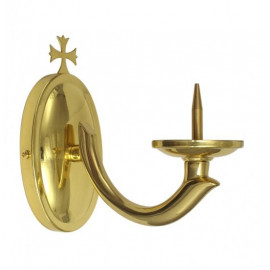
During the dedication of a church, the bishop anoints twelve crosses on the walls with sacred chrism and incense is burned at each one. In Polish churches these twelve places are traditionally marked with a small brass wall candle holder called a zacheuszka — a consecration sconce that holds a candle and, in many churches, is lit on the anniversary of the dedication. The same idea appears in other countries as consecration candles or apostolic candles on the church walls. Our brass sconces, including the model with a cross, follow this tradition and are also made in electric versions for crosses placed high on the wall.
Where to Mount Wall Sconces in a Church
Typical placements in a Catholic church:
- Sanctuary — pairs flanking the altar area, often on the wall behind or beside the celebrant’s chair.
- Nave — evenly spaced along the bays between windows, at a height that keeps flames above eye level and out of reach.
- Consecration crosses — the twelve anointed places, each with its own candle sconce.
- Side chapels and shrines — beside statues, icons and side altars.
- Entrance and foyer — where a warm light greets people arriving for Mass.
- Sacristy — practical light for vesting and preparation.
For candle sconces the rule of thumb is simple: mount them high enough that the flame sits above eye level and cannot be reached or brushed by passers-by, and low enough that the light still serves the space. Electric sconces can be placed higher. Always fix into solid masonry or a proper anchor, and have any electric model installed by a qualified electrician in line with local codes.
Choosing the Right Size
Our sconces run from 18.5 cm to 26.5 cm wide, which covers most church walls:
- 20 × 12 cm (small and medium) — narrow pillars, side altars, corridors and smaller chapels.
- 23 × 18 cm — the classic size for nave bays and sanctuary walls.
- 26 × 20.5 cm and 26.5 × 21 cm (large) — tall naves and spacious sanctuaries where a more visible flame is needed.
- 18.5 × 17.4 cm (with cross) — a compact consecration-style sconce with a cross cast into the backplate.
If you are replacing existing sconces, measure the old backplate and the distance from the wall to the candle socket and match it as closely as possible.
Materials and Finish
All seven pieces are made of cast brass — the same material as our altar candlesticks and sanctuary lamps. After casting, each sconce is polished and then covered with a special clear varnish and heat-cured, which seals the brass against tarnish and fingerprints. This is why our lacquered brass keeps its golden shine for years without polishing, and why the finish is described as maintenance-free. The electric model is finished the same way.
Caring for Lacquered Brass Sconces
Care is deliberately simple: dust the sconce with a dry cotton cloth or another dry, dust-absorbing cloth. Do not use water, and do not use chemical fluids or metal polish — they would strip the protective lacquer and expose the raw brass underneath. If candle wax drips onto the backplate, let it harden completely, then lift it off with a fingernail or a plastic card; for stubborn residue see our guide to cleaning brass without damaging the lacquer. Keep the candle socket clean so candles sit straight and burn evenly.
Light in Catholic Worship
Light is one of the oldest symbols of the Christian faith: Christ called himself the light of the world (John 8:12), the Easter candle is greeted with the words Lumen Christi, and at every Mass candles burn on and around the altar. Wall lamps continue this language of light along the church interior — the small flames of the sconces turn the walls of the nave into a quiet echo of the altar. In the same way the eternal light of the sanctuary lamp marks the presence of the Blessed Sacrament, the wall sconces mark the places and the spaces that lead to it.
Our Church Wall Lamp Collection
Seven cast-brass pieces, all polished and lacquered with a heat-cured clear finish:
| Model | Size (W × H) | Price | Availability |
|---|---|---|---|
| Candle sconce | 23 × 18 cm | $209 | In stock |
| Candle sconce, small | 20 × 12 cm | $282 | Out of stock — contact us |
| Candle sconce, medium | 20 × 12 cm | $303 | Out of stock — contact us |
| Candle sconce with cross | 18.5 × 17.4 cm | $290 | Out of stock — contact us |
| Candle sconce, large | 26 × 20.5 cm | $335 | Out of stock — contact us |
| Candle sconce, large | 26.5 × 21 cm | $355 | Out of stock — contact us |
| Electric sconce | 18 × 40 cm | $464 | Out of stock — contact us |
Looking for a light for the tabernacle instead? See our sanctuary lamps. For candles at the altar, browse the altar candlesticks. And if you are furnishing the whole sanctuary, our guide to setting up a Catholic church sanctuary walks through every element.
Frequently Asked Questions
What Are Those Wall Lamps in a Church Called?
They are called wall sconces, or simply wall lamps or wall lights. If they are mounted as markers of the twelve consecration crosses, Polish tradition calls them zacheuszki. A wall-mounted light burning before the tabernacle is a sanctuary lamp, which is a different fixture with a different meaning.
What Are the Lights in a Church Called?
The main lights of a Catholic church have their own names: the sanctuary lamp (or eternal light) burns before the tabernacle; altar candles stand on candlesticks at the altar; the Paschal candle stands near the ambo or font during Eastertide; votive candles burn on stands in front of shrines; and wall sconces or wall lamps light the walls of the nave and chapels. Chandeliers and pendant lamps, where present, are general lighting.
What Type of Lighting Is Best for a Church Sanctuary?
The sanctuary needs light that serves the liturgy without competing with it: warm, steady and modest. Pairs of brass wall sconces on the sanctuary walls, altar candles on the altar itself, and the red eternal light of the sanctuary lamp before the tabernacle are the traditional arrangement. For the faithful to read and follow Mass, general lighting should be dimmable and directed toward the people, not onto the altar alone.
Where Can I Find Brass Wall Sconces for Candles?
You are on the right page: every sconce in this collection is cast in solid brass and made for real candles, except one electric model for hard-to-reach walls. Sizes range from 18.5 cm to 26.5 cm wide, with prices from $209. Items marked out of stock can be ordered on request — contact us for availability.
Are Candle or Electric Wall Sconces Better for a Church?
Neither is universally better. Candle sconces give a real flame and suit walls that are easy to tend; electric sconces are safer for high or restricted walls and need no candle care. Many churches use both: candles where people can see and reach them, electric models high on the walls and above the consecration crosses.
Do Church Wall Sconces Need an Electrician?
Candle sconces are simply fixed to the wall with anchors and need no wiring. Electric sconces must be installed by a qualified electrician and connected in line with local building and fire codes; the mounting itself is straightforward, but the supply should always be handled by a professional.
How High Should Wall Sconces Be Mounted in a Church?
For candle sconces, the working rule is: high enough that the flame is above eye level and cannot be reached or brushed, low enough that the light still serves the space. Electric sconces can be mounted higher. Consecration sconces follow the height of the crosses anointed on the walls, which varies from church to church.
How Many Wall Sconces Does a Church Need?
It depends on the architecture. A common approach is pairs flanking the sanctuary, evenly spaced sconces along the nave bays, one at each of the twelve consecration crosses, and additional sconces in side chapels and the entrance. Even spacing matters more than a specific number — sconces read as a rhythm along the walls.
What Candles Fit a Brass Wall Sconce?
Church wall sconces are made for the candles used in the sanctuary: usually beeswax or beeswax-blend church candles. Check the diameter of your candles against the socket before ordering — the socket should hold the candle upright without wobbling. Never force an oversized candle into the socket; it can split the holder or make the candle lean and drip.
How Do You Clean Brass Wall Sconces?
Our sconces are lacquered, so cleaning means dusting: wipe them with a dry cotton or other dust-absorbing cloth. Do not use water, chemical fluids or metal polish — these strip the clear lacquer and expose the raw brass. Wax drips should be left to harden and then lifted off with a fingernail or plastic card.
What Does the Light in a Church Symbolize?
Light in a church symbolizes Christ himself — the light of the world (John 8:12) — and the presence of God among his people. The Easter candle is greeted with the words Lumen Christi, the eternal light before the tabernacle announces the Blessed Sacrament, and the candles at Mass express reverence and festivity. Wall sconces carry this same symbolism along the walls of the church.
What Is a Zacheuszka?
Zacheuszka is the traditional Polish name for a small brass wall candle holder that marks one of the twelve consecration crosses anointed on the walls of a church at its dedication. Some models hold a candle, others are electric; our brass sconces, including the model with a cross, follow this tradition.
Can Wall Sconces Be Used in a Home Chapel?
Yes. Small brass sconces are a common furnishing for home chapels and prayer corners, usually placed beside a crucifix or icon and above a home altar. For the wider arrangement, see our guide to setting up a home altar, and for a devotional light consider a small sanctuary lamp for the home.
Related Reading
Continue with our guides: what a sanctuary lamp is and why it is used in every Catholic church, how to set up a Catholic church sanctuary, how to clean brass without damaging the lacquer, and how many candles belong on a Catholic altar. For the altar itself, browse altar candlesticks and sanctuary lamps.
