
What Is a Tabor? (Thabor) — The Stand Under the Monstrance
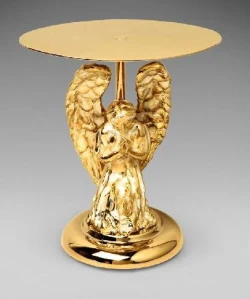
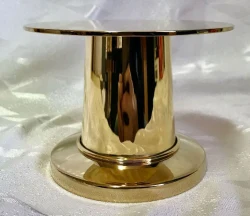
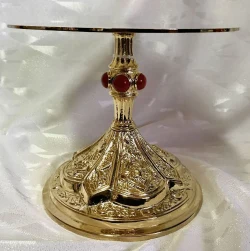
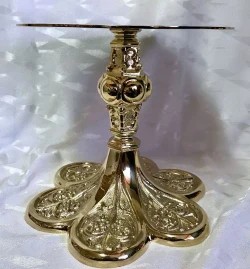
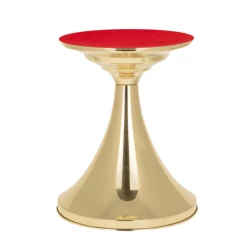
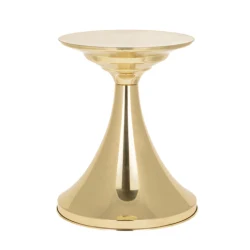
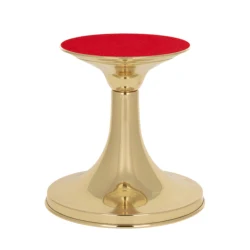
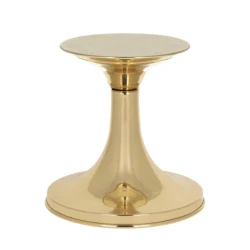
A tabor (also spelled thabor) is the stand or throne on which the monstrance is placed during Eucharistic exposition. It raises the monstrance to a visible height, gives it a stable base, and keeps the Blessed Sacrament at the center of the sanctuary. A tabor is not a monstrance and it is not a tabernacle: the monstrance holds the host, the tabernacle reserves the Blessed Sacrament, and the tabor supports the monstrance during adoration and Benediction.
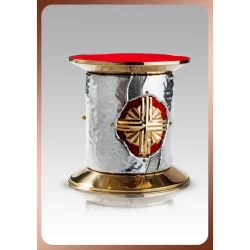
The name comes from Mount Tabor, the mountain traditionally associated with the Transfiguration of Jesus. In liturgical catalogues the same object appears as a tabor, thabor, monstrance stand, monstrance throne, or monstrance pedestal. Our collection includes 11 brass tabors and thrones from $262 to $1,117, with top plates from 14.5 cm to 35 cm and heights from 12 cm to 35 cm.
If you are looking for the vessel that holds the host, see our Catholic monstrances and ostensoria. If you need the stand that supports it, you are in the right category.
Tabor vs Thabor vs Monstrance Stand vs Monstrance Throne
The words describe the same liturgical object. Tabor is the shorter spelling used in many English-language catalogues; thabor follows the older transliteration and is common in Italian and Spanish church-supply listings. Monstrance stand is the plain descriptive term, while monstrance throne emphasizes the solemn, elevated character of the piece. Some catalogues also list the same object as a monstrance tabor.
All four terms are useful for search and for parish conversations, but they are not four different products. When you compare a tabor, a thabor, a stand, and a throne, check the same four measurements: the height, the diameter or dimensions of the top plate, the base footprint, and the weight. The name on the listing matters less than the fit between the stand and your monstrance.
Why the Stand Matters for Eucharistic Adoration
During exposition, the monstrance is the focal point of the church. A stand that is too low hides the host behind the altar or the first rows of pews. A stand that is too small can make the monstrance unstable. A stand that is too tall may obscure the altar cross or make the monstrance difficult to incensate and reverence.
A well-chosen tabor does three things. It elevates the monstrance so the host is visible from the nave. It stabilizes the vessel so it does not shift during incensation, Benediction, or a procession. It also frames the monstrance as a sacred object, especially when the finish and style match the altar, tabernacle, and candlesticks.
For permanent exposition, the stand usually remains in place in the adoration chapel or on the altar of repose. For Benediction, it is used for the period of exposition and then the monstrance is removed or veiled according to local custom. In both cases, the stand should be heavy enough to resist accidental contact and stable enough that the monstrance sits flat on the top plate.
How to Choose the Right Tabor for Your Monstrance
Measure the base of the monstrance
Turn the monstrance upside down and measure the widest part of its base. The top plate of the tabor should be at least as wide as the base, and preferably a little wider. A monstrance base that overhangs the top plate is a tipping risk. If the base is circular, measure the diameter; if it is rectangular or cross-shaped, measure both dimensions.
Match the top plate
The top plate is the surface that receives the monstrance. In this collection the top plates range from 14.5 cm to 35 cm, including a rectangular 35 × 25 cm top on the gilded throne. A small chapel monstrance may need only a 14.5–15 cm plate, while a larger church monstrance with a broad base needs 20–27 cm or more.
Choose the height for visibility
The right height depends on the altar, the tabernacle, and the distance to the pews. A 12–13 cm tabor is a low pedestal for a small monstrance or a tabernacle throne. A 21–27 cm stand raises the monstrance above the altar line. A 32–35 cm throne is a substantial piece for a large sanctuary or a prominent place of exposition. If the monstrance will be seen from the back of a long nave, choose more height rather than less.
Check stability and weight
A wider base and a heavier casting are not cosmetic details. They are what keep the monstrance upright. Lacquered brass is durable, but it is still metal: a top-heavy monstrance on a narrow stand can be knocked over. If your monstrance is tall or has a heavy upper section, choose a throne with a broad base and a top plate that supports the full base of the vessel.
Select the material and finish
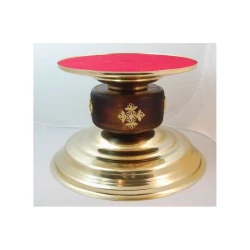
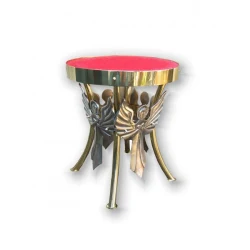
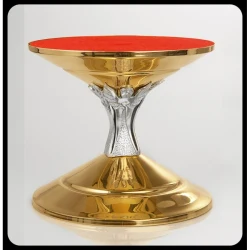
Brass is the traditional material for tabors because it is strong, repairable, and takes a warm gold finish. Gold-plated and 24-karat gilded surfaces are appropriate for solemn expositions. Painted and lacquered finishes are practical where the stand is handled often. Wooden hexagon details and silvery evangelist figures add contrast without changing the function of the stand.
Brass, Gold-Plated, Lacquered: What Our Tabors Are Made Of
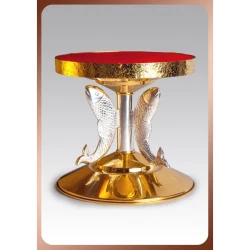
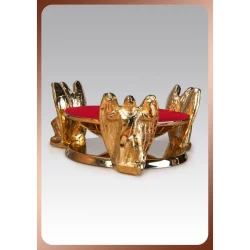
Most pieces in this collection are cast brass, polished, and lacquered. The lacquer protects the brass from fingerprints and slow oxidation, so the stand keeps its finish with ordinary dusting. Several models are gold-plated, and the gilded throne is finished with 24-karat gold. One throne has a painted brass finish; two have decorative wooden hexagons; one has a silvery base with evangelist figures. These are brass stands with a wooden accent, not a solid wooden monstrance stand; if you need a fully wooden monstrance stand, contact us before ordering.
These are stands, not vessels. They do not include a luna, a glass window, or a host case. If you also need the vessel that holds the host, choose a monstrance separately. If you need a cover for the monstrance when it is not exposed, see our embroidered monstrance veils. For the tabernacle itself, see our liturgical ciboria and pyxes for reserving and carrying the Blessed Sacrament.
Tabor Sizes in This Collection
The table below lists the 11 active pieces with their height, top plate, material or finish, and price. Use it to narrow the choice before you measure your monstrance.
| Piece | Height | Top plate | Material / finish | Price |
|---|---|---|---|---|
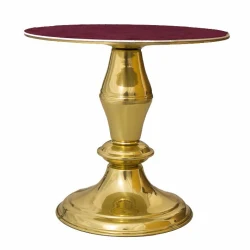
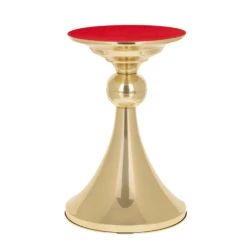
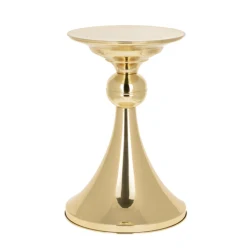
| Brass Tabor for Monstrance — 12 cm | 12 cm | 14.5 cm | Gold-plated cast brass, lacquered | $262 |
| Brass Tabor with Red Cloth — 12 cm | 12 cm | 14.5 cm | Gold-plated brass, red cloth top | $274 |
| Brass Tabor for Monstrance — 21 cm | 21 cm | 24 cm | Gold-plated cast brass, lacquered | $322 |
| Brass Tabor with Red Cloth — 21 cm | 21 cm | 24 cm | Gold-plated brass, red cloth top | $342 |
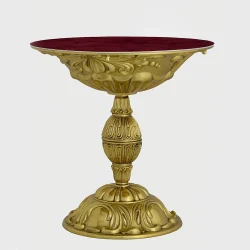
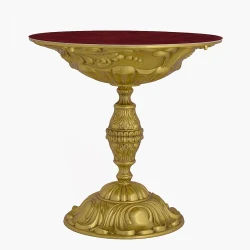
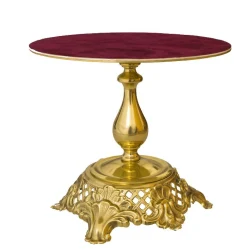
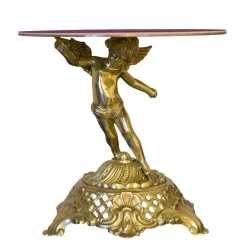
| Baroque Brass Monstrance Throne — 12 cm | 12 cm | 15 cm | Cast brass, baroque base | $328 |
| Brass Monstrance Throne with Wooden Hexagon — 27 cm | 27 cm | 27 cm | Lacquered brass, wooden hexagon | $424 |
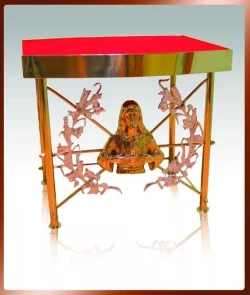
| Brass Monstrance Throne — 32 cm, 27 cm Top | 32 cm | 27 cm | Painted brass | $484 |
| Round Brass Monstrance Throne with Wooden Hexagon — 27 cm | 27 cm | 27 cm | Lacquered brass, wooden hexagon | $512 |
| Rococo Brass Monstrance Throne — 13 cm | 13 cm | 20 cm | Cast brass, rococo base | $552 |
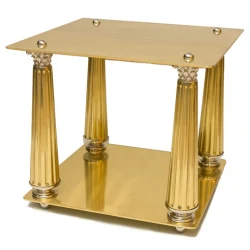
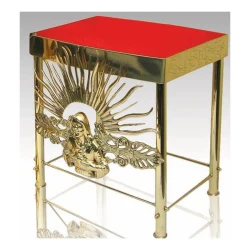
| Gilded Monstrance Throne — 23 cm, 24k Gold | 23 cm | 35 × 25 cm | 24-karat gilded brass, lacquered | $803 |
| Brass Monstrance Throne with Evangelist Base — 35 cm | 35 cm | — | Lacquered brass, silvery evangelist figures | $1,117 |
Prices are shown in USD. Shipping is free on orders over $100. If you are unsure which top plate fits your monstrance, measure the base and compare it with the table before ordering.
How to Care for a Brass Tabor
Dust the stand with a soft, dry cloth. For fingerprints, use a barely damp cloth and dry immediately. Avoid abrasive powders, scouring pads, and ammonia-based cleaners, especially on gold-plated and gilded surfaces. Do not use silver polish on gold plate; it can dull the finish. If the stand has a wooden hexagon or painted surface, keep it away from water and direct heat.
Check the top plate and base periodically for looseness. A felt or cork pad under the monstrance base can protect the plate and reduce sliding. When the stand is not in use, store it in a dry sacristy cabinet rather than a damp storage room. For more on storing sacred vessels, see our guide to storing chalices, ciboria, and monstrances safely.
Tabor, Tabernacle, and Monstrance: Clearing Up the Confusion
| Object | What it is | What it does |
|---|---|---|
| Monstrance | The sacred vessel with a luna or glass window | Holds the consecrated host for exposition and Benediction |
| Ostensorium | Another name for a monstrance | Same function as a monstrance |
| Tabor / thabor | The stand or throne under the monstrance | Elevates and stabilizes the monstrance |
| Monstrance stand | Descriptive name for a tabor | Same function as a tabor |
| Tabernacle | The locked receptacle for reserving the Blessed Sacrament | Keeps the Eucharist in the church outside Mass |
A tabernacle monstrance is not a standard term for a tabor. Some churches place a monstrance in a tabernacle throne or in a niche, but the stand and the tabernacle remain different objects. If you need a vessel for reserving the host, choose a ciborium or pyx. If you need a stand for exposition, choose a tabor.
Permanent Exposition and Benediction
For perpetual adoration, the tabor usually stays in the adoration chapel or on the altar of repose. The stand should be stable enough that it is not moved during cleaning, and the monstrance should be easy to veil and unveil. For Benediction, the stand is placed where the priest can incensate and reverence the Blessed Sacrament without obstruction. The humeral veil is a separate vestment used by the priest, not a cover for the stand.
If your parish is setting up a new adoration chapel, read our guide to choosing a monstrance and our monstrance price guide. For the relationship between the monstrance, veil, and tabor, see Monstrance Cover vs Veil vs Tabor.
Frequently Asked Questions About Monstrance Stands and Thabors
Q: What is a tabor in the Catholic Church?
A: A tabor, also spelled thabor, is the stand or throne that holds the monstrance during Eucharistic exposition. It raises the monstrance to a visible height and gives it a stable base. It is not the vessel that holds the host and it is not the tabernacle.
Q: Why is it called a tabor?
A: The name refers to Mount Tabor, the mountain traditionally associated with the Transfiguration of Jesus. The stand “lifts up” the monstrance in a way that recalls the luminous revelation of Christ on the mountain.
Q: What is the difference between a tabor and a monstrance throne?
A: There is no functional difference. Tabor, thabor, monstrance stand, and monstrance throne are different names for the same kind of object. Catalogues use “throne” when the piece is large or solemn and “stand” when it is a simple pedestal.
Q: Is a tabor the same as a tabernacle?
A: No. The tabernacle is the locked receptacle that reserves the Blessed Sacrament. The tabor is the stand that supports the monstrance during adoration and Benediction. A tabernacle may have a throne or niche for the monstrance, but the two objects are distinct.
Q: How do I choose the right size tabor?
A: Measure the widest part of the monstrance base and choose a top plate at least as wide, preferably slightly wider. Then choose a height that keeps the host visible from the nave without blocking the altar cross or the priest’s movements.
Q: What is the top plate diameter and why does it matter?
A: The top plate is the surface that receives the monstrance. If it is too small, the monstrance base overhangs and the vessel becomes unstable. In this collection the top plates range from 14.5 cm to 35 cm, including a rectangular 35 × 25 cm top.
Q: How tall should a monstrance stand be?
A: A 12–13 cm stand is a low pedestal for a small monstrance or a tabernacle throne. A 21–27 cm stand raises the monstrance above the altar line. A 32–35 cm throne is suitable for a large sanctuary or a prominent place of exposition. Visibility from the back of the church is the practical test.
Q: Can I use a tabor for Benediction?
A: Yes. The tabor is used for exposition before Benediction and remains in place while the priest incensates and blesses the people. The monstrance is then removed or veiled according to local custom.
Q: Can a tabor be used for perpetual adoration?
A: Yes. For perpetual adoration, choose a stable stand with a top plate that matches the monstrance base and a height that keeps the host visible. The stand usually remains in the adoration chapel or on the altar of repose.
Q: What materials are best for a monstrance stand?
A: Cast brass is the traditional choice because it is strong, repairable, and takes a warm gold finish. Gold-plated and 24-karat gilded surfaces are appropriate for solemn expositions. Lacquered and painted finishes are practical where the stand is handled often.
Q: How do I clean a brass tabor?
A: Dust it with a soft, dry cloth. For fingerprints, use a barely damp cloth and dry immediately. Avoid abrasive powders, scouring pads, ammonia-based cleaners, and silver polish on gold plate. Keep wooden and painted details away from water and direct heat.
Q: Does a tabor come with a monstrance?
A: No. The pieces in this category are stands only. They do not include a monstrance, luna, glass window, or host case. If you need the vessel, choose a monstrance separately from our monstrance collection.
Q: Can I use a tabor at home?
A: A monstrance and tabor are normally used in a church or chapel. For a home oratory, follow the guidance of your pastor and the norms of your diocese before reserving or exposing the Blessed Sacrament.
Q: How much does a tabor cost?
A: In this collection, brass tabors and thrones range from $262 to $1,117. The price depends on the size, the amount of cast detail, the finish, and whether the piece has a gilded, painted, or wooden element.
Q: What is the difference between a monstrance and an ostensorium?
A: They are the same vessel under two names. “Monstrance” comes from the Latin monstrare, “to show”; “ostensorium” comes from ostendere, “to display.” Both terms refer to the vessel that holds the host for exposition.
Q: Why can't you touch the monstrance?
A: The monstrance holds the Blessed Sacrament, so it is handled with reverence and normally only by the priest, deacon, or an instituted acolyte according to liturgical norms. The tabor is a support, not a vessel, and should also be treated with care.
Browse the Collection
Choose a brass tabor for a small chapel monstrance, a monstrance throne for a larger sanctuary, or a gilded throne for solemn exposition. If you need the vessel, the veil, or the tabernacle, use the links below.
- Catholic monstrances and ostensoria
- Embroidered monstrance veils
- Embroidered humeral veils
- Ciborium veils
- Liturgical ciboria
- Catholic pyxes
- Liturgical reliquaries
For more background, read What Is a Tabor?, Tabor vs Thabor vs Monstrance Stand, and How to Measure a Tabor.
Related: Pair your tabor with a custodia or ostensorium.
