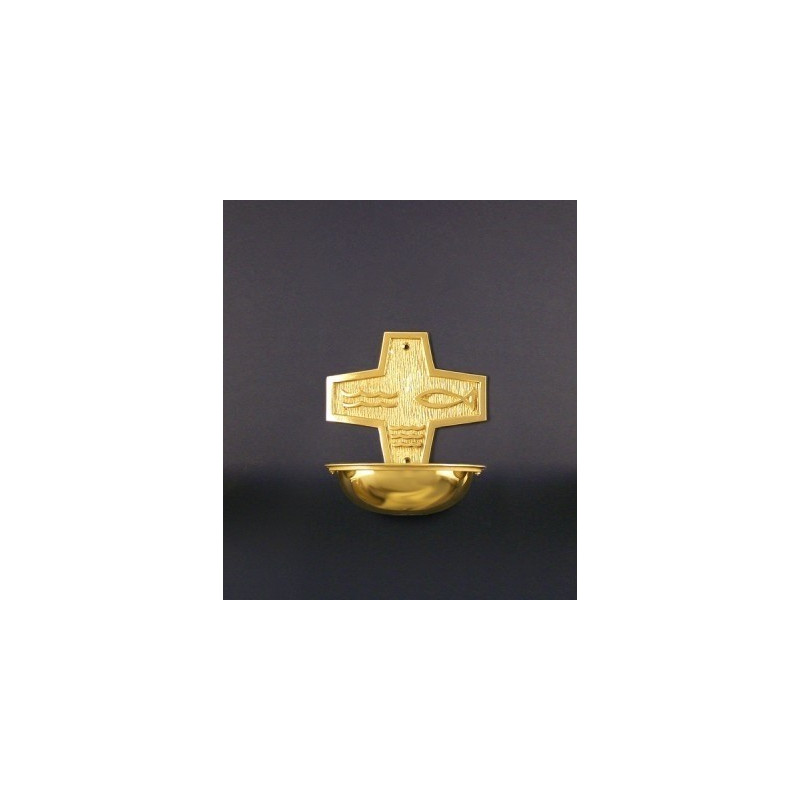


Walk into any Catholic church and you'll find holy water fonts near the entrance. They're so common that we often take them for granted. But these simple vessels carry deep meaning and deserve our attention.
What Is a Holy Water Font?
A holy water font (or stoup) is a vessel containing holy water placed near the entrance of a church. The faithful dip their fingers in it and make the Sign of the Cross as a reminder of their baptism and a preparation for worship.
Stoup, Font, Aspersorium — the Names Explained
The vocabulary overlaps, so here is the short version: a stoup is the small vessel, usually wall-mounted, at the door; a holy water font is the general name for any vessel that holds holy water, fixed or portable; an aspersorium is the portable pot or bucket the priest carries for sprinkling; and a baptismal font is the large basin where baptism is administered — a different vessel with a different job. If you are looking for the working vessels of the sacristy, see our holy water pots and aspersoriums.
Types of Holy Water Fonts
| Type | Description | Best For |
|---|---|---|
| Wall-mounted | Attached to the wall near the entrance | Small churches, narrow entryways |
| Pedestal/stand | Free-standing on a column or pedestal | Larger churches, prominent placement |
| Baptismal font | Large font used for both baptism and holy water | Churches with prominent baptistery |
| Portable | Small vessel that can be moved | Temporary setups, outdoor use |
Where to Place Holy Water Fonts
Holy water fonts should be placed near the entrance of the church — ideally on both sides of the main door. They should be at a comfortable height (about waist level) and easily accessible to all, including children and people in wheelchairs.
Materials and Finishes
Fonts are made in bronze, brass, marble, ceramic, and stone. Brass and bronze are the classic choices: they hold a finish for decades, suit both traditional and modern interiors, and can be kept bright with a dry cloth. Marble and stone give weight and permanence at a standing font; ceramic and porcelain suit homes and small chapels. Match the finish to the space — polished brass for ornate sanctuaries, nickel or bronze for quieter interiors.
Caring for a Holy Water Font
Empty and clean the font regularly: refresh the water at least monthly, and sooner if it becomes cloudy. Pour the old water into the sacrarium or onto the ground, never down an ordinary drain. Wipe metal fonts with a soft dry cloth; wash ceramic and stone with plain water and dry them fully. Never use abrasive cleaners on plated or varnished finishes.
What I Recommend
For most parishes, I recommend wall-mounted bronze or brass fonts — they're durable, beautiful, and don't take up floor space. If your church has a prominent baptistery, consider a larger baptismal font that doubles as a holy water font.
Frequently Asked Questions
Q: What is a holy water font called?
A: A holy water font is also called a stoup — the usual name for the small wall-mounted vessel at the church door. The portable pot used for sprinkling is an aspersorium.
Q: What is the difference between a holy water font and a baptismal font?
A: A holy water font holds water for the faithful to bless themselves; a baptismal font is the large basin where baptism is administered. Some churches use a single large font for both, but they are distinct vessels in liturgical law.
Q: Where should I put a holy water font at home?
A: At the entrance — beside the front door, at a height where everyone can reach it. Many families keep a small font or bottle of holy water at each exterior door as a daily reminder of baptism.
Q: How often should holy water be changed?
A: Holy water should be refreshed regularly — at least monthly, or more often if it becomes cloudy or develops an odor. The old water should be poured into the sacrarium.
Q: How do I clean a holy water font?
A: Empty it, wash metal parts with a dry or barely damp soft cloth (or mild soap for unvarnished metal), and dry fully before refilling. Ceramic and stone fonts can be washed with plain water. Avoid abrasives and chemicals.
Conclusion
Holy water fonts are a simple but powerful reminder of our baptism. Place them prominently, keep them clean and filled, and encourage your parishioners to use them as they enter the church.
Browse our collection of holy water fonts — wall-mounted, pedestal, and baptismal styles in bronze, brass, and marble. Pair your font with a holy water sprinkler (aspergillum) for blessings, and see our holy water pots and aspersoriums for carrying water to the home. To bless your own home with holy water, follow our guide: How to Bless Your Home with Holy Water.