

The Easter season is the most joyful time of the liturgical year, and the vestment colours reflect that. From the Easter Vigil to Pentecost, the Church moves through white, gold and red — and each colour carries a distinct meaning. This guide explains what to wear on each day and what to prepare in the sacristy.
Easter Season Vestment Colours at a Glance
| Day | Colour | Notes |
|---|---|---|
| Holy Thursday (Mass of the Lord's Supper) | White | The institution of the Eucharist |
| Good Friday | Red | The Passion of the Lord |
| Easter Vigil | White or Gold | The most solemn celebration of the year |
| Easter Sunday | White or Gold | The Resurrection |
| Octave of Easter | White or Gold | Eight days of celebration |
| Divine Mercy Sunday | White | Second Sunday of Easter |
| Ascension | White | Christ ascends into heaven |
| Pentecost | Red | Descent of the Holy Spirit |
Why White and Gold Dominate the Easter Season
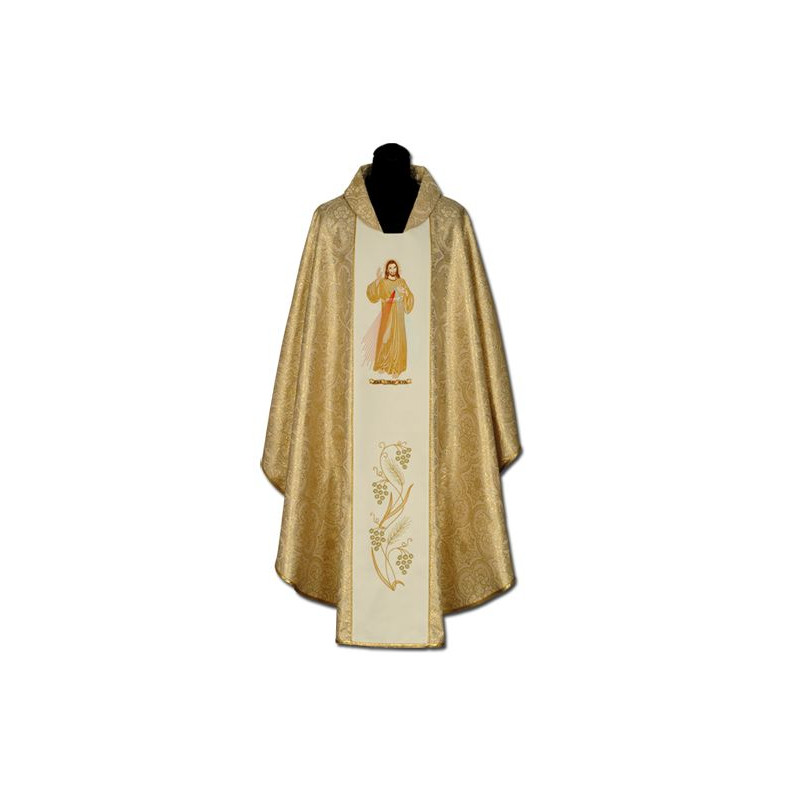
White is the liturgical colour of Easter. It stands for light, purity and the glory of the Resurrection, and it is used from the Easter Vigil through the Ascension. Gold may be used in place of white on more solemn occasions, which is why so many Easter vestments combine a white or ecru ground with gold embroidery, gold braid and gold velvet bands.
Gold is not a separate season. It is a way of giving the most important celebrations their full solemnity. Many parishes use gold for the Easter Vigil and Easter Sunday, then return to white for the rest of the Octave and the weeks that follow.
Red for Pentecost
Pentecost has its own colour: red, for the descent of the Holy Spirit. The same red is used on Good Friday for the Passion. If your parish has a red chasuble, Pentecost is the day to use it; the white and gold Easter set returns for the solemnities that follow.
Some parishes also use red for confirmations, for the feast of the Holy Cross and for the feasts of martyrs. A red vestment is therefore not only a Pentecost purchase — it is part of the ordinary cycle of the liturgical year.
What to Prepare for the Easter Vigil
The Easter Vigil is the longest and most complex liturgy of the year, and the vestments need to be prepared in advance. A practical checklist for the sacristy:
- Chasuble — white or gold, with the matching stole.
- Cope — white or gold for the procession and the singing of the Exsultet.
- Altar cloth — white, freshly pressed.
- Chalice veil — white or gold, matching the chasuble.
- Humeral veil — if the Blessed Sacrament is carried in procession.
- Red vestments — ready for Pentecost, so the set does not have to be found at the last minute.
Easter Sunday and the Octave
Easter Sunday repeats the white or gold of the Vigil. The Octave treats all eight days as solemnities of the Lord, so the same vestment can be used throughout the week. Divine Mercy Sunday, the Second Sunday of Easter, is also white.
This is the point of a single well-chosen Easter chasuble: it serves the Vigil, Easter Sunday, the Octave and the following Sundays without changing the visual language of the season.
Ascension and the Final Weeks
The Ascension is celebrated forty days after Easter and remains white. The season then moves towards Pentecost, when red returns for the final day. If your parish has only one white solemn vestment, it will be in use for most of the fifty days.
A Sacristan's Checklist
- Check the chasuble, stole and cope for loose threads and missing buttons before the Vigil.
- Press the altar cloth and the white vestments, ironing on the reverse side.
- Match the chalice veil and the burse to the colour of the day.
- Hang the vestments on wide hangers so the shoulders keep their shape.
- Keep the red Pentecost set separate and ready.
Frequently Asked Questions
Q: Can I use gold vestments for the entire Easter season?
A: Gold may be used in place of white on solemn occasions. Many parishes use gold for the Easter Vigil and Easter Sunday, then switch to white for the rest of the season.
Q: Is red used at any point during the Easter season?
A: Yes. Pentecost, the last day of the season, is red. Good Friday, before Easter, is also red.
Q: What colour is used on Divine Mercy Sunday?
A: White. Divine Mercy Sunday is the Second Sunday of Easter and is celebrated as a solemnity of the Lord.
Q: Do I need a separate cope for the Easter Vigil?
A: A white or gold cope is used for the procession and the Exsultet. If your parish does not have one, the chasuble is the essential vestment for the Mass itself.
Q: How many days does the Easter season last?
A: Fifty days, from Easter Sunday to Pentecost. The Easter Vigil opens the season and Pentecost closes it.
Where to Find Easter Vestments
Our Easter chasubles collection includes white, ecru and gold vestments with the Risen Christ, the Lamb of God and victory cross motifs. For the wider range, see the chasuble collection, the white chasubles and the gold chasubles.
Matching Easter stoles and white and gold copes are made in the same workshop in Lublewo Gdańskie, Poland.