
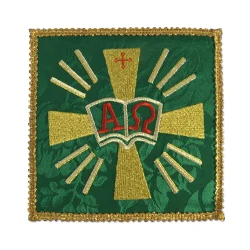


Green Chalice Palls for Ordinary Time
A green chalice pall is the stiffened square placed over the chalice cup during Mass when the Church wears green. It matches the vestments of Ordinary Time, protects the Precious Blood from dust and insects, and gives the altar a calm, unified look through the longest season of the liturgical year. In the Roman Rite the pall is one of the small chalice linens, not a vestment and not the large funeral pall used at funerals.
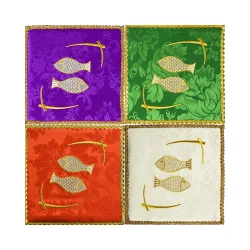
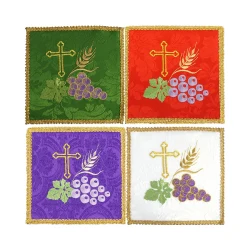
Our green collection includes 28 product listings: 26 single palls and two multi-color sets of four. The sizes are 16 × 16 cm (6.3 × 6.3 in), 18 × 18 cm (7.1 × 7.1 in) and 20 × 20 cm (7.9 × 7.9 in). Single palls range from $15 to $20; each set of four is $62.50. The two sets each contain one green pall, together with red, purple, white or ecru palls, so they are a practical way to cover several liturgical colors at once.
What a Chalice Pall Does at Mass
The pall is placed on the chalice after the wine and water have been poured and the chalice has been set on the corporal. The General Instruction of the Roman Missal lists the pall among the things prepared for Mass (no. 118) and directs that the chalice be covered with a pall as appropriate (no. 142). Its practical job is simple: it keeps dust, insects and anything else in the air from falling into the Precious Blood. Its liturgical job is to keep the altar quiet and orderly, with the chalice veiled before the offertory and the pall covering the cup during the Eucharistic Prayer.
Because the pall is a linen, it should be clean, flat and dignified. It is not a doctrine in itself; it is a small piece of liturgical craftsmanship that helps the Church celebrate the Eucharist with reverence. A wrinkled or stained pall distracts; a crisp, well-pressed pall lets the beauty of the altar speak.
Why Green? The Meaning of Ordinary Time
Green is the color of hope, life and growth. It accompanies the Church through Ordinary Time, the weeks in which the faithful live the mystery of Christ Sunday after Sunday, growing in faith like a field in season. The General Instruction of the Roman Missal (no. 346) directs that green is used in the Offices and Masses of Ordinary Time. On more solemn days a festive color may be used even if it is not the color of the day, and in the United States gold or silver vestments may be worn on more solemn occasions.
Ordinary Time is not “ordinary” in the sense of unimportant. It is the steady, unhurried part of the liturgical year: the weeks after the Baptism of the Lord until Ash Wednesday, and then the weeks after Pentecost until Advent. It includes most Sundays of the year, the parables and miracles of Christ, the slow formation of a parish, and the ordinary work of holiness. A green pall belongs to that rhythm. It is the pall a sacristy reaches for most often, and it should be as carefully kept as the white pall of Easter or the violet pall of Advent.
When a Green Chalice Pall Is Used
Use a green pall whenever Mass is celebrated in green vestments: Sundays and weekdays of Ordinary Time, and other celebrations where the day’s color or the nature of the Mass calls for green. It is not used in Advent or Lent, when violet is the norm; during the Easter season, when white is the norm; on Pentecost, when red is worn; or at Requiem Masses and funerals, where black, violet or white may be used according to local custom. On solemnities and feasts the proper color of the day takes precedence, even if the day falls within Ordinary Time.
The safest rule is to match the celebrant’s vestments. If the vestments are green, a green pall is the natural choice. If they are white, red, violet or black, use a pall in that color instead. The pall is not meant to make a separate liturgical statement; it should complete the altar’s color and let the Eucharistic action remain the center of attention. This is why our collection includes white, red, violet, ecru, black, rose, gold and blue palls alongside the green ones.
Three Sizes for Different Chalices
Size is a practical question, not a rubric. A pall should cover the opening of the chalice and rest securely on the rim without hanging so far over the sides that it becomes awkward to handle. Our green collection currently has three sizes:
| Size | Inches | Listings | Typical use |
|---|---|---|---|
| 16 × 16 cm | 6.3 × 6.3 in | 8 | Compact chalices, travel sets, small chapels |
| 18 × 18 cm | 7.1 × 7.1 in | 16 | Most parish chalices and everyday Mass |
| 20 × 20 cm | 7.9 × 7.9 in | 4 | Larger cups and generous coverage |
The 16 × 16 cm size is the most common among the newest designs, while 18 × 18 cm is the most common size across the whole collection. If you are buying for a parish, measure the chalice cup rather than guessing from a photograph. A pall that is too small can slide; one that is too large can look heavy and be harder to store flat. The two sets of four are made up of 16 × 16 cm palls, which suits parishes that use several chalices or want a compact set for the main colors.
Cotton, Jacquard and Brocade
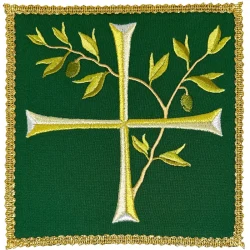
Many of the older green designs are 100% cotton, a matte, crisp fabric that takes embroidery cleanly and is easy to care for. The newer 16 × 16 cm designs are mostly jacquard, with a patterned woven ground, a gold brocade border and embroidery worked in satin and metallic threads. One newer design uses a plain fabric with a gold and silver cross and an olive branch. The differences are visual and practical rather than doctrinal: cotton is quiet and traditional, jacquard is more decorative, and the brocade border gives the pall a finished, solemn edge.
Almost all of the newer palls have a removable stiffening panel at the bottom. The panel gives the square its shape and keeps it from sagging into the chalice. Because it can be taken out, the fabric can be washed and ironed without damaging the stiffener. If you are choosing between two palls, check whether the insert is removable, especially if the pall will be used every week and laundered often.
Symbols on Green Chalice Palls
The embroidery on a green pall is not decoration for its own sake. Each symbol points to Christ and to the Eucharist, and the green ground gives those symbols a particular tone of hope and growth:
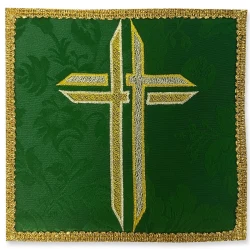
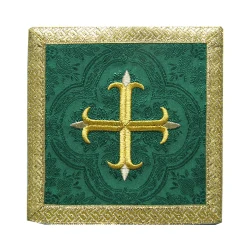
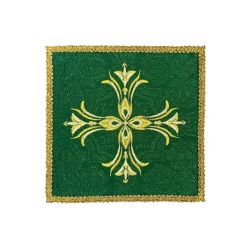
- The cross — the central sign of the Passion and Resurrection. Our green palls include simple crosses, decorative crosses, a jacquard-woven cross and a cross with gold trim.
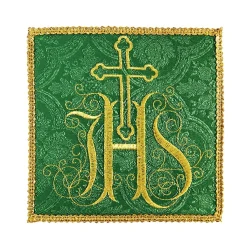
- IHS — the monogram of the Holy Name of Jesus, often worked in gold thread. It is one of the most traditional motifs on chalice linens.
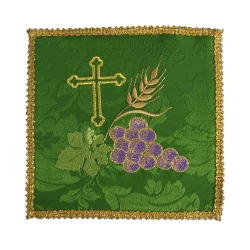
- Ears of grain and grapes — the signs of bread and wine, the matter of the Eucharist. Several palls combine them with a cross.
- The fish — an early Christian symbol of Christ, used here in several versions, including a set of four palls with two fish and gold cross motifs.
- Alpha and Omega — the beginning and the end, a reference to Christ in the Book of Revelation. One green pall pairs the letters with a cross and an open book.
- The olive branch — a sign of peace and reconciliation, combined with a gold and silver cross on one of the newer palls.
Choose a symbol that fits the vestments, the church’s iconography and the taste of the sacristy. A parish with a strong Gothic revival character may prefer a more ornate cross; a modern chapel may prefer a simple IHS or a clean olive branch. The symbol should never compete with the chalice itself.
How to Choose a Green Chalice Pall
Five questions usually settle the choice:
- What color are the vestments? Green for Ordinary Time; white, red, violet, black, rose, gold or blue for their proper seasons and occasions.
- What size is the chalice? 16 cm for compact cups, 18 cm for most parish chalices, 20 cm for larger cups and generous coverage.
- How often will it be washed? A removable stiffening panel makes frequent care easier. Cotton is straightforward; jacquard and brocade need a little more care around the embroidery.
- Single pall or set? A single pall is enough for one chalice. A set of four is useful for parishes with several chalices or for covering the main colors without buying each piece separately.
- What symbol fits the church? Cross, IHS, wheat and grapes, fish, Alpha and Omega or olive branch. The symbol should support the altar, not dominate it.
For a parish, buy at least two palls per chalice if the budget allows: one in use, one clean or being laundered. A small stock of green palls is especially practical because Ordinary Time is long and the same color returns week after week. If you are starting from scratch, the chalice linen sets combine the main pieces, while the full chalice pall collection lets you compare every color and design.
Green Palls and the Chalice Linens
A green pall works with the rest of the chalice linens: the corporal under the chalice, the purificator for wiping the cup, the chalice veil over the vessels before the offertory, and the burse that carries the folded corporal. Some sacristies also use a finger towel or manuterge for the priest’s hands. The paten and the chalice are the sacred vessels the linens serve.
At Mass the chalice is prepared on the credence table and brought to the altar; the veil is removed for the offertory, the wine and water are poured, and the pall is placed on the cup. After Communion the vessels are purified and the linens are folded and stored. A coordinated set keeps the sacristy organized and makes it easier for altar servers to find the right piece in the right color. If you are unsure how the pall differs from the veil or the corporal, see our guide to what a chalice pall is and the comparison of the chalice veil.
Care and Storage
Remove the stiffening panel if it is removable. Wash the fabric gently according to the care label, using a mild detergent and no bleach. Rinse well, press the water out without twisting, and dry flat so the square keeps its shape. Iron on the reverse while the fabric is slightly damp, using a pressing cloth over embroidery and metallic thread. Store the pall flat or rolled, not folded sharply across the embroidery, and keep it away from damp sacristy cupboards.
Before Mass, check that the insert is in place, the corners are square and the pall sits flat on the chalice. A quick check saves a distraction at the altar. For a fuller routine, see How to Wash Liturgical Linens, which covers corporals, purificators and altar cloths as well as palls.
For Sacristans, Parishes and Altar Servers
A sacristy does not need a large inventory, but it needs the right one. Count the chalices, note the colors used through the year, and keep at least one spare green pall if the parish celebrates several weekday Masses. Label the shelves by color and size; store palls flat in a shallow drawer or rolled in a clean cloth. Teach altar servers which linen is which, and show them how to place the pall without touching the inside of the chalice. A well-organized sacristy is a quiet form of hospitality.
For parishes that serve several chalices, the two multi-color sets of four are a practical solution: each set covers green, red, purple and white or ecru, so the main seasons are covered in one purchase. For a single chalice, a green single pall and a white pall for Easter and Christmas are the usual starting point. Add violet for Advent and Lent, red for Pentecost and martyrs, and black or violet for funerals as local custom requires.
Frequently Asked Questions
What Is a Green Chalice Pall?
A green chalice pall is a stiffened square of fabric, usually 16–20 cm, placed over the chalice cup during Mass in Ordinary Time. It matches the green vestments, protects the Precious Blood from dust and insects, and is one of the chalice linens rather than a vestment.
What Is a Pall in the Catholic Church?
In the Roman Rite a pall is the small stiffened cloth that covers the chalice at Mass. It is not the large funeral pall that covers a coffin, and it is not the pallium worn by an archbishop. The chalice pall is a practical linen that keeps the cup covered and the altar orderly.
When Is a Green Chalice Pall Used?
It is used whenever Mass is celebrated in green vestments: Sundays and weekdays of Ordinary Time, and other celebrations where the day’s color or the nature of the Mass calls for green. It is not used in Advent, Lent, the Easter season, on Pentecost or at Requiem Masses when another color is appointed.
What Color Is Ordinary Time?
Green. The General Instruction of the Roman Missal (no. 346) directs that green is used in the Offices and Masses of Ordinary Time. On more solemn days a festive color may replace the color of the day.
What Are the Chalice Linens Used at Mass?
The core set includes the corporal, the purificator, the chalice pall, the chalice veil and the burse. Some sacristies also use a finger towel or manuterge. The pall covers the chalice; the veil covers the vessels before the offertory; the corporal is the large square on which the chalice and paten rest.
What Is the Difference Between a Chalice Pall and a Chalice Veil?
The chalice veil is the larger square that covers the chalice and paten before the Eucharistic liturgy. The pall is the small stiffened square placed directly on the chalice cup after the wine is poured. Both may match the liturgical color, but they serve different moments at Mass.
What Is the Difference Between a Chalice Pall and a Funeral Pall?
A chalice pall is a small square, usually 16–20 cm, that covers the chalice at Mass. A funeral pall is the large cloth that covers the coffin. They share the word “pall” but are different objects with different uses.
What Size Chalice Pall Should I Buy?
Measure the chalice cup. A 16 × 16 cm pall suits compact chalices and travel sets; 18 × 18 cm is the most common size for parish chalices; 20 × 20 cm gives generous coverage for larger cups. The pall should cover the opening and rest securely on the rim without sliding.
What Materials Are Green Chalice Palls Made Of?
Many older designs are 100% cotton. The newer 16 × 16 cm designs are mostly jacquard, with a gold brocade border and satin or metallic-thread embroidery; one uses a plain fabric. Most newer palls have a removable stiffening panel so the fabric can be washed and ironed.
Can a Green Chalice Pall Be Washed?
Yes, if you follow the care label. Remove the stiffening panel first, wash gently without bleach, dry flat and iron on the reverse with a pressing cloth over the embroidery. Do not iron directly over metallic thread, and do not fold the pall sharply across the decoration.
Do I Need a Set of Four Chalice Palls?
Not for a single chalice. A set of four is useful for a parish with several chalices or for covering the main liturgical colors in one purchase. Our two sets each contain one green pall plus red, purple and white or ecru palls; they are not four identical green palls.
What Symbols Are Embroidered on Green Palls?
Crosses in several styles, the IHS monogram, ears of grain, grapes, the fish, Alpha and Omega, and an olive branch. The symbol should fit the vestments and the church’s iconography; it should support the altar rather than dominate it.
What Does the GIRM Say About the Pall?
The General Instruction of the Roman Missal lists the pall among the things prepared for Mass (no. 118) and directs that the chalice be covered with a pall as appropriate (no. 142). It also directs that green is used in the Offices and Masses of Ordinary Time (no. 346).
Is a Green Pall Only for Sundays?
No. Green is used on weekdays of Ordinary Time as well, and on other celebrations where the day’s color or the nature of the Mass calls for green. The deciding question is the color of the day and the vestments, not whether the Mass is Sunday or weekday.
What Is the Cover for the Chalice Called?
The large cover used before the offertory is the chalice veil. The small stiffened square placed on the cup during the Eucharistic Prayer is the pall. If someone asks for a “chalice pall cover,” they usually mean the pall itself or the veil that covers the vessels.
Explore the Green Chalice Pall Collection
Compare every design in the chalice pall collection, or go directly to the white, red, violet, ecru, black, rose, gold and blue palls. For the season, read Green Vestments Guide: Everything You Need to Know About Ordinary Time and the Complete Guide to Liturgical Colors. For the vessels and linens, see Chalice and Paten, What Is a Chalice Veil? and How to Wash Liturgical Linens.
