

Pink Chalice Pall: Definition and Use
A pink chalice pall is a stiffened square of fabric placed over the mouth of the chalice during Mass. It protects the Precious Blood from dust and insects, lies flat on the rim, and is lifted when the chalice is needed again. In the liturgical books the colour is called rose — a lightened violet, not a separate colour of the calendar — while "pink" is the everyday name for the same soft shade.
The pall belongs to the family of chalice linens, together with the corporal and the purificator. It is not the large funeral pall that covers a casket, and it is not the chalice veil that drapes over the whole chalice outside the Eucharistic Prayer. At the altar, "pall" without qualification always means the small square that covers the cup.
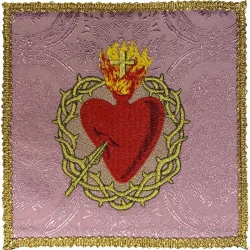
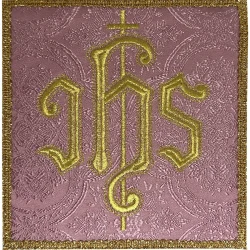
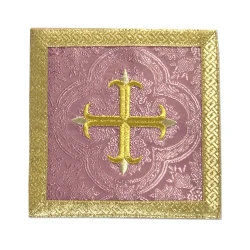
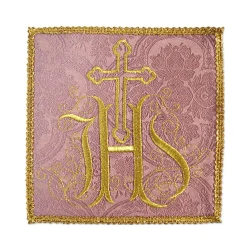
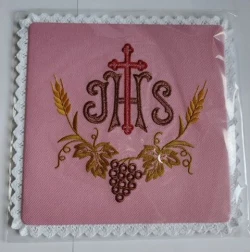
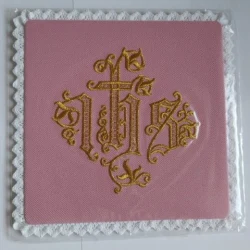
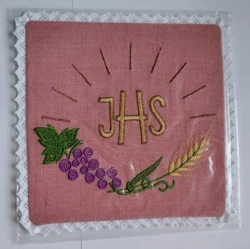
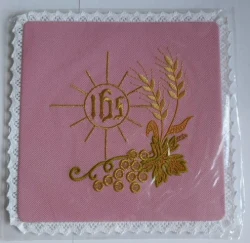
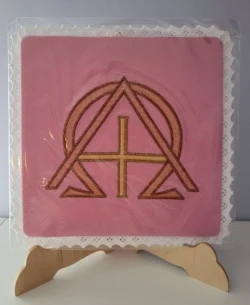
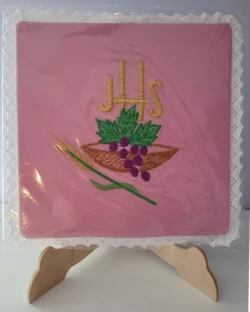
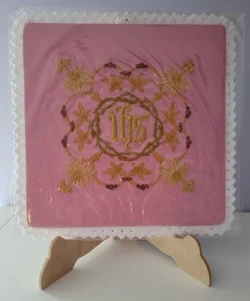
Our pink chalice pall collection includes 12 embroidered designs, priced from $16.50 to $20. Eight are 100% cotton palls measuring 20 × 20 cm; four are jacquard palls in 16 × 16 cm and 18 × 18 cm with a removable stiffening panel. The designs range from a gold IHS monogram and the Sacred Heart to Alpha and Omega, wheat and grapes, and a gold cross with a decorative ribbon.
Rose, Not Pink: The Liturgical Colour
Rose is the colour of joy breaking into penance. It is used on the two Sundays that interrupt Advent and Lent with a note of anticipation: Gaudete Sunday, the Third Sunday of Advent, and Laetare Sunday, the Fourth Sunday of Lent. The names come from the opening words of the liturgies — Gaudete and Laetare, both meaning "rejoice".
The General Instruction of the Roman Missal (no. 346) lists rose among the liturgical colours and assigns it to those two Sundays. The use of rose is optional: where it is not the practice, violet is used instead. Rose is never a requirement, and it is not worn on any other day of the year.
Because the colour appears only twice a year, a pink chalice pall is one of the rarest pieces in a sacristy. A parish that already owns violet for Advent and Lent can complete the set with a single rose pall and a matching pink (rose) chasuble. For the wider calendar, see our complete guide to liturgical colours and the guide to what the colour of vestments means.
When a Pink Chalice Pall Is Used
A pink chalice pall is used on Gaudete Sunday (the Third Sunday of Advent) and Laetare Sunday (the Fourth Sunday of Lent), where the parish follows the rose custom. In the 2026–2027 liturgical year those dates are 13 December 2026 and 7 March 2027. On both days the rose colour is optional; violet may always be used instead.
The pall is placed on the chalice after the gifts are prepared and remains there during the Eucharistic Prayer. It is removed when the chalice is needed at Communion and during the purification. In the Traditional Latin Mass the chalice is dressed at the credence table before Mass, and the pall is already in place when the chalice is unveiled at the Canon.
If you are preparing the sacristy for Advent, see What Colour Vestments for Advent?; for Lent, see What Colour Vestments for Lent?.
Sizes, Fabrics and Removable Inserts
Measure the outer rim of your chalice before choosing a pink chalice pall. The pall must cover the opening completely and lie flat, with no overhang that could catch on the veil or on the priest's hands. Our pink palls come in three sizes:
| Size | Designs | Material | Stiffening |
|---|---|---|---|
| 20 × 20 cm (7.9 × 7.9 in) | 8 | 100% cotton | stiffened |
| 18 × 18 cm (7.1 × 7.1 in) | 1 | jacquard | removable panel |
| 16 × 16 cm (6.3 × 6.3 in) | 3 | jacquard | removable panel |
The 20 cm cotton palls are the classic sacristy choice: light, washable, and finished with embroidery. The jacquard palls have a denser weave and a gold brocade border; their stiffening panel can be removed from the bottom before washing and reinserted afterwards. If you are choosing between the two, cotton is the simpler everyday option and jacquard is the more decorative one for solemn days.
Traditionally a pall is made of linen. Our palls are cotton or jacquard, not linen, and we say so plainly: the liturgical object is the stiffened square, and the fabric is chosen for care and durability. If you specifically need a linen pall, check the individual listing or contact us before ordering.
The 12 Pink Chalice Pall Designs
The collection is built around three families. The eight cotton 20 cm palls carry the most traditional motifs: the IHS monogram in several variants, Alpha and Omega, and IHS with ears of wheat and grapes. The 18 cm jacquard pall is finished with an embroidered gold cross and a decorative ribbon. The three 16 cm jacquard palls include a gold IHS on a brocade ground, an IHS with the "35K" design, and a multicoloured Sacred Heart of Jesus with a crown of thorns.
All twelve are finished in the same rose-pink family, so they can be mixed with the rest of the rose set without a colour clash. Prices run from $16.50 for the 16 cm jacquard palls to $20 for the 18 cm cross-and-ribbon design and the 20 cm cotton pall with lace edging. The full chalice pall collection adds the other liturgical colours: white, ecru, red, green, violet, black, gold and blue.
How to Choose a Pink Chalice Pall
Three measurements and one decision are enough. First, measure the outer rim of your chalice: most parish chalices take a 20 cm pall, while a smaller chapel chalice may take 16 cm or 18 cm. Second, decide between cotton and jacquard. Third, check the stiffening: a removable panel makes washing easier, while a stiffened cotton pall is the simpler everyday piece.
- Size: the pall must cover the rim completely and lie flat.
- Material: cotton for everyday use; jacquard for a more formal rose set.
- Stiffening: removable panel for easy washing; fixed stiffening for a firmer feel.
- Design: IHS is the most common; Alpha and Omega, wheat and grapes, the Sacred Heart and the cross are also traditional.
If you are buying for a parish that already has rose vestments, match the pall to the chasuble and the chalice veil. A coordinated chalice linen set is the simplest way to keep the whole chalice dressing in one fabric and one colour.
Care and Storage
Remove the stiffening panel before washing. Hand-wash the cover in lukewarm water with a mild detergent, rinse thoroughly, and iron while slightly damp. Do not use bleach or starch. If the pall has touched the Precious Blood, rinse it first in a sacrarium or over a drain that goes into the ground, as the Church asks for linens that have been in contact with the Eucharist.
Store the pall flat or rolled, away from direct sunlight and damp. A small box or a padded envelope is enough; do not fold the embroidered face against a hard edge. For the full routine, see our guide How to Wash Liturgical Linens.
Pink Palls and the Rest of the Rose Set
Rose is a complete set, not a single piece. The pink (rose) chasubles are the centre of it; the pink chalice pall is the piece that sits on the altar. A chalice linen set adds the corporal, purificator and veil, and the chalice veil completes the dressing of the chalice. If your sacristy keeps the whole year in one cupboard, the pall collection has the matching colours for every season.
For the days that surround the rose Sundays, see the violet palls for Advent and Lent, the white palls for Christmas and Easter, and the red palls for Pentecost.
Pink Chalice Pall vs Chalice Veil and Purificator
The pall, the veil and the purificator are three different linens. The pall is the small stiffened square that covers the mouth of the chalice during the Eucharistic Prayer. The chalice veil is the larger cloth that covers the whole chalice outside the Eucharistic Prayer. The purificator is the small white cloth used to wipe the chalice after Communion. The corporal is the square on which the vessels rest.
If you are assembling a set, the practical order is: corporal, purificator, pall, veil. Our guide Purificator vs Corporal vs Finger Towel explains the differences, and What Is a Chalice Pall? covers the history and the sizes.
Frequently Asked Questions
What is a pink chalice pall?
A pink chalice pall is a stiffened square of fabric placed over the mouth of the chalice during Mass. It protects the Precious Blood from dust and insects and is removed when the chalice is needed. "Rose" is the liturgical name for the colour; "pink" is the everyday name.
Is a pink chalice pall the same as a rose chalice pall?
Yes. Rose is the liturgical colour and pink is the common name for the same soft shade. A pink chalice pall and a rose chalice pall are the same item; our collection uses both terms so that the page is easy to find.
When is a pink chalice pall used?
On Gaudete Sunday, the Third Sunday of Advent, and Laetare Sunday, the Fourth Sunday of Lent, where the rose custom is followed. In 2026–2027 those Sundays fall on 13 December 2026 and 7 March 2027. Rose is optional; violet may always be used instead.
What size is a pink chalice pall?
Our pink palls come in 16 × 16 cm (6.3 in), 18 × 18 cm (7.1 in) and 20 × 20 cm (7.9 in). Measure the outer rim of your chalice: the pall must cover the opening completely and lie flat. Most parish chalices take the 20 cm size.
Does a pink chalice pall have an insert?
The jacquard palls in 16 cm and 18 cm have a removable stiffening panel that can be taken out from the bottom before washing. The 20 cm cotton palls are stiffened. Check the individual listing if you need a removable insert.
Is a chalice pall made of linen or cotton?
Traditionally a chalice pall is made of linen. Our pink palls are 100% cotton or jacquard, not linen. Both are washable and durable; the liturgical object is the stiffened square, and the fabric is a practical choice.
Can a pink chalice pall be washed?
Yes. Remove the stiffening panel if the pall has one, hand-wash the cover in lukewarm water with a mild detergent, rinse thoroughly, and iron while slightly damp. Do not use bleach or starch. If the pall has touched the Precious Blood, rinse it in a sacrarium first.
What symbols are embroidered on pink chalice palls?
The collection includes the IHS monogram, Alpha and Omega, ears of wheat and grapes, the Sacred Heart of Jesus, and a gold cross with a decorative ribbon. IHS is the most common christogram on chalice linens; it stands for the Holy Name of Jesus.
How much does a pink chalice pall cost?
Prices run from $16.50 for the 16 cm jacquard palls to $20 for the 18 cm cross-and-ribbon pall and the 20 cm cotton pall with lace edging. The 20 cm cotton IHS designs are $17.50, and the lace-edged 20 cm pall is $20.
What is the difference between a chalice pall and a chalice veil?
The pall is the small stiffened square that covers the mouth of the chalice during the Eucharistic Prayer. The chalice veil is the larger cloth that covers the whole chalice outside the Eucharistic Prayer. They are different linens and are used at different moments of the Mass.
What is the difference between a chalice pall and a purificator?
The pall covers the chalice; the purificator is the small white cloth used to wipe the chalice after Communion and during the ablutions. Both belong to the chalice linens, together with the corporal and the veil.
Can a pink chalice pall be used at a wedding?
No, not normally. Rose is assigned to Gaudete and Laetare Sundays, not to weddings. For a nuptial Mass choose a white or gold pall; see the white chalice palls and the gold chalice palls.
What does IHS mean on a chalice pall?
IHS is a christogram made from the first three letters of the Greek name of Jesus (ΙΗΣΟΥΣ). On a chalice pall it marks the Holy Name and is one of the oldest Christian symbols used on liturgical linens.
How many pink chalice palls does a sacristy need?
One is enough for the two rose Sundays, but many sacristies keep a spare so that one can be washed while the other is in use. If you also keep a full set of colours, the pink pall can be stored with the rose vestments and the chalice veil.
Do you ship pink chalice palls to the United States?
Yes. In-stock palls are dispatched within 72 hours and reach the United States by FedEx in about 2–5 business days. Orders over $100 ship free within the United States. See the shipping information and the returns policy.
How should I store a pink chalice pall?
Store it flat or rolled, away from direct sunlight and damp. Do not fold the embroidered face against a hard edge. A small box or a padded envelope is enough, and the pall should be completely dry before it is put away.
